Riding Mountain National Park · Manitoba
Where autumn clues
lead into bear country.
At the forested rise above Manitoba's prairie, berry patches, muddy tracks, scratched bark, and secure food lockers reveal how black bears prepare for winter—and how visitors help keep them wild.
PARKAbout 3,000 km²
PLACETreaty 2 territory
BLACK BEAR DIETUp to 85% plants
WINTERDenning up to 6 months
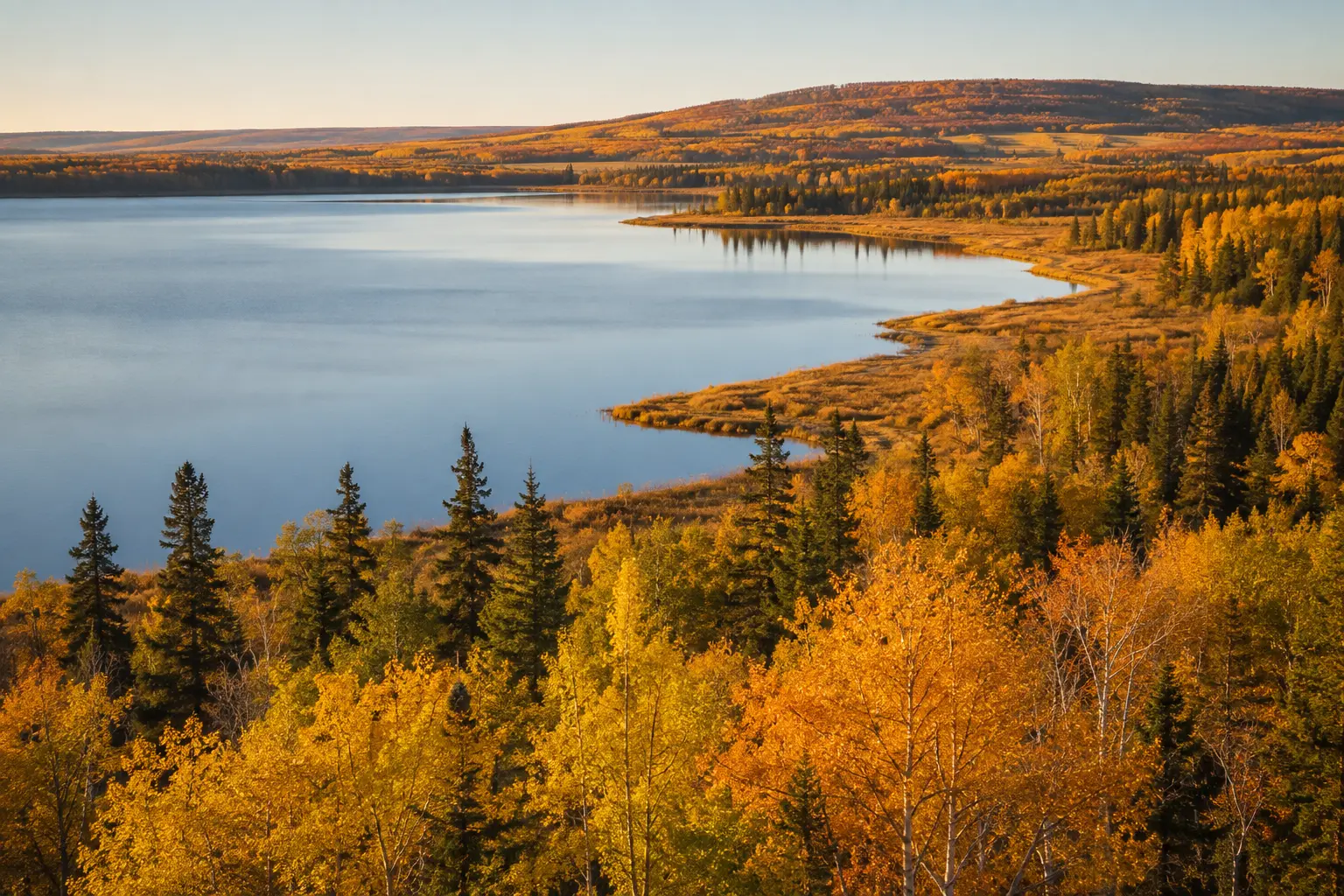
A forest island above the prairie
Riding Mountain gathers grassland, forest, lake, and wetland into one high, living mosaic.
Clear Lake sits within a Boreal Plains landscape where dark spruce, trembling aspen, meadow openings, and marshes create rich black-bear habitat. Autumn concentrates the story: food ripens, tracks register in wet ground, and bears spend long hours building the energy reserve that will carry them through winter.

The chapter begins with evidence
A quiet trail can hold a whole morning's story.
The Ominnik Marsh boardwalk passes through cattails, open water, and the forest edge near Wasagaming. It is an ideal place to notice how habitat changes over a few steps—without leaving the designated route.
-
01
Listen before lookingMarsh birds, moving water, and rustling leaves describe the habitat beyond the trail.
-
02
Read fresh groundMud can hold tracks, but fresh bear signs are a reason to leave the area—not move closer.
-
03
Check conditionsTrail work, weather, and wildlife activity can change access. Confirm the latest Parks Canada notices before setting out.
Stay on designated trails, travel in a tight group, make noise, and carry accessible bear spray that you know how to use.
Why autumn matters
A berry patch can become a winter fuel station.
Plants provide as much as 85 percent of a black bear's diet. In late summer and fall, bears may feed for much of the day, converting berry sugars, seeds, insects, and other available foods into stored body fat.
- Search Bears travel between productive natural food patches.
- Feed Saskatoon berries, chokecherries, and highbush cranberries can be especially important.
- Store Extra energy becomes body fat.
- Den That reserve supports the bear through the food-scarce winter.


From autumn abundance to winter shelter
The forest feeds the bear.
The den protects the pause.
Black bears may den for up to six months when winter food is scarce. A den can form beneath a stump, log, rock, or hillside. Inside, the bear's activity, breathing, and heartbeat slow while stored fat supplies energy.
Bears do not pack winter lunches. They carry the season's energy within them.
A sheltered forest location buffers wind and weather.
Leaves, grass, and twigs can line a female bear's den.
Never investigate or disturb a suspected den. Leave wildlife space.
Read signs without following them
Tracks and bark marks are information—not invitations.
A black bear track typically shows five toes and a broad pad. Scratched bark, hair caught on rough wood, scat, or recently disturbed soil can reveal that a bear passed through. Fresh evidence should increase distance and awareness.

A broad heel pad helps distinguish the print from many smaller mammals.
Claw tips may register ahead of the toes in soft mud.
Claws and rubbing can leave scratches or hair on a tree.
Turn around or take a wide detour rather than moving toward the animal.

EVERY
SCENT SAFE PEOPLE · WILD BEARS
The chapter's practical lesson
A strong locker protects more than a picnic.
Food, wrappers, coolers, dishes, pet food, bottles, cooking gear, and toiletries can all attract wildlife. Secure every scented item whenever it is not actively in use, clean the site completely, and use bear-proof garbage containers.
Keep wildlife wild. A bear that never receives human food has less reason to return to roads, campsites, and picnic areas.
Four relationships to notice
Read bear country as one connected system.
Seasonal food, fresh evidence, winter shelter, and human behaviour shape whether black bears can move through Riding Mountain safely and naturally.
✦FORAGE
Autumn abundance supports winter survival.
Berry-producing openings and forest edges concentrate natural food at a crucial time.
- Berry
- Seed
- Insect
- Mushroom
⌾EVIDENCE
Fresh clues should change your route.
Notice signs without touching them, leaving the trail, or trying to locate the animal.
- Five toes
- Wide pad
- Claw mark
⌁DEN
A den is a protected space, not a viewing site.
Give suspected den locations a wide berth and never disturb the entrance or surrounding cover.
- Stump
- Log
- Rock
- Hillside
▣COEXIST
Secure storage is wildlife conservation.
Removing every attractant protects visitors and the long-term future of individual bears.
- Locker
- Clean site
- Sealed waste
Questions from curious explorers
Black-bear country, answered.
01Where is Riding Mountain National Park?+
It is in southwestern Manitoba, centred on Wasagaming at Clear Lake. Parks Canada places it about 3.5 hours west of Winnipeg by road.
02What do black bears eat in autumn?+
Plants can supply up to 85 percent of their diet. Berries—including Saskatoon berries, chokecherries, and highbush cranberries—are crucial foods as bears prepare to den.
03Do black bears truly hibernate?+
Parks Canada describes black bears as denning for up to six months. Their activity, breathing, and heartbeat slow while stored body fat supplies energy.
04What should I do if I see a black bear?+
Remain calm, stay together, speak in a low voice, and back away slowly. Never run. Leave the bear an escape route and follow current Parks Canada guidance.
05What counts as a bear attractant?+
Food, garbage, coolers, dishes, pet food, bottles, barbecues, stoves, and toiletries can all attract wildlife—even when they appear clean or empty.
06Which trails fit the chapter landscape?+
Ominnik Marsh, the Lakeshore routes at Clear Lake, and the upgraded Boreal Trail each reveal a different forest-water edge. Always check current conditions and closures.
Research trail
Official sources behind the field guide
Black-bear diet and denning, visitor safety, trail access, Clear Lake ecology, park geography, and Indigenous place context were checked against Parks Canada. Conditions change; confirm notices directly before travelling.
Find the chapter landscape
Make Wasagaming your trailhead.
The chapter's landscape is concentrated around Clear Lake, Ominnik Marsh, and the forest trails north and east of Wasagaming. Highway 10 provides the principal north–south approach; the official map below shows real roads, trailheads, facilities, distances, and route connections.

 Read the full chapter
Open Story 7 ↗
Read the full chapter
Open Story 7 ↗
Continue the Prairie Adventure
Story 7
Black Bear Surprise
Join Lumi, Aspen, Hazel, and Barrett at Riding Mountain National Park as five-toed tracks, claw-marked bark, a berry meadow, and one secure food locker reveal how black bears prepare for winter—and how careful visitors protect them.
Opens the chapter page on the main Maple Explorers site.