Okanagan Valley · British Columbia
An orchard begins
with a quiet exchange.
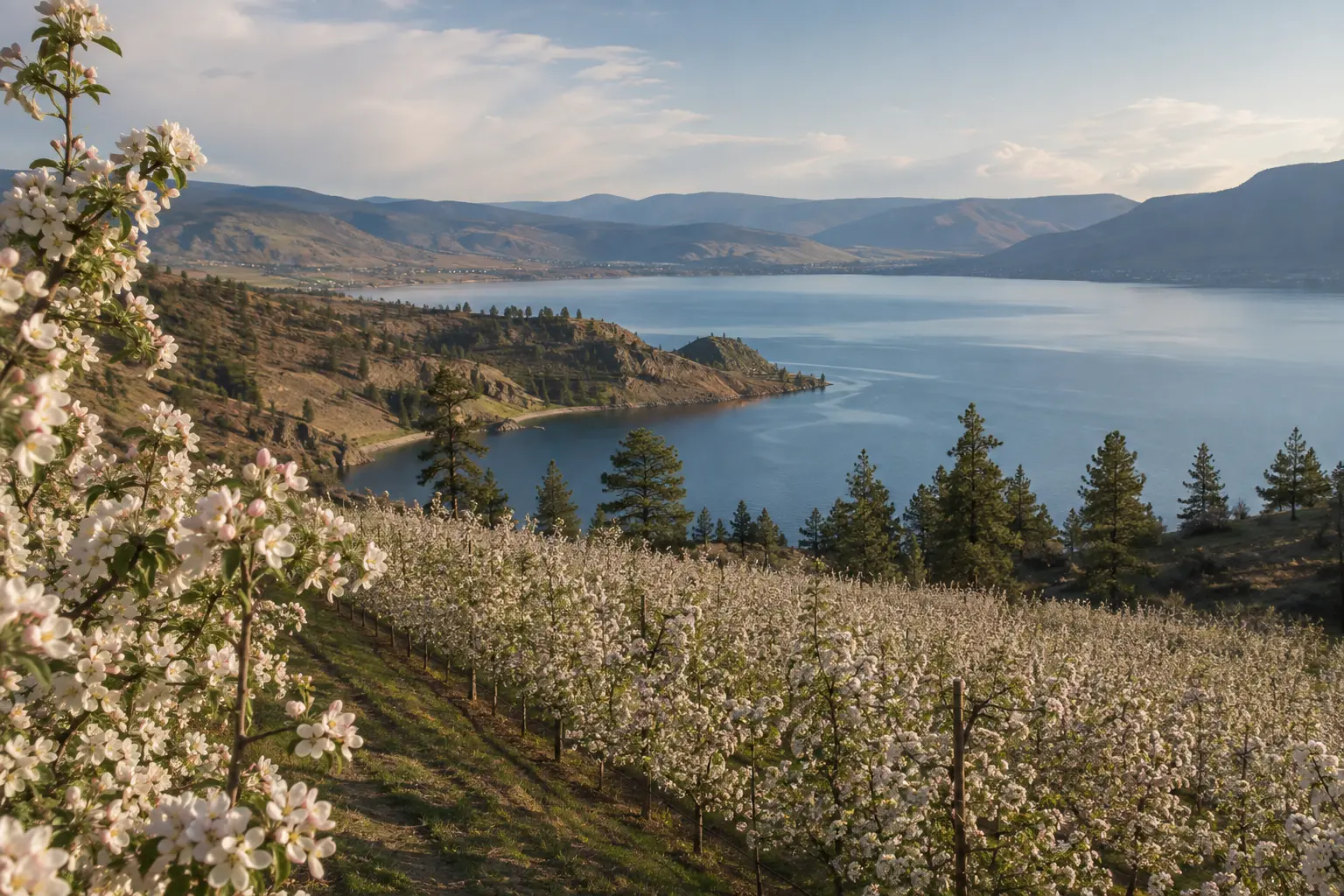
Apple blossom, moving pollen, measured water, and living soil meet on a dry interior bench above one of British Columbia's great valley lakes.
THE BASINAlmost 200 km long
VALLEY WATERSix connected main lakes
SPRING WORKBees move pollen flower to flower
ROOT ZONEDrip lines place water carefully
A dry valley made productive
The lake looks abundant. The orchard still depends on precision.
The Okanagan Basin is a long, narrow watershed framed by dry slopes and interior plateaus. Snow, creeks, reservoirs, and the valley lakes support communities, ecosystems, and farms—but orchard water must still be delivered at the right time and in the right amount.
From blossom to apple
A flower does not disappear. It changes its job.
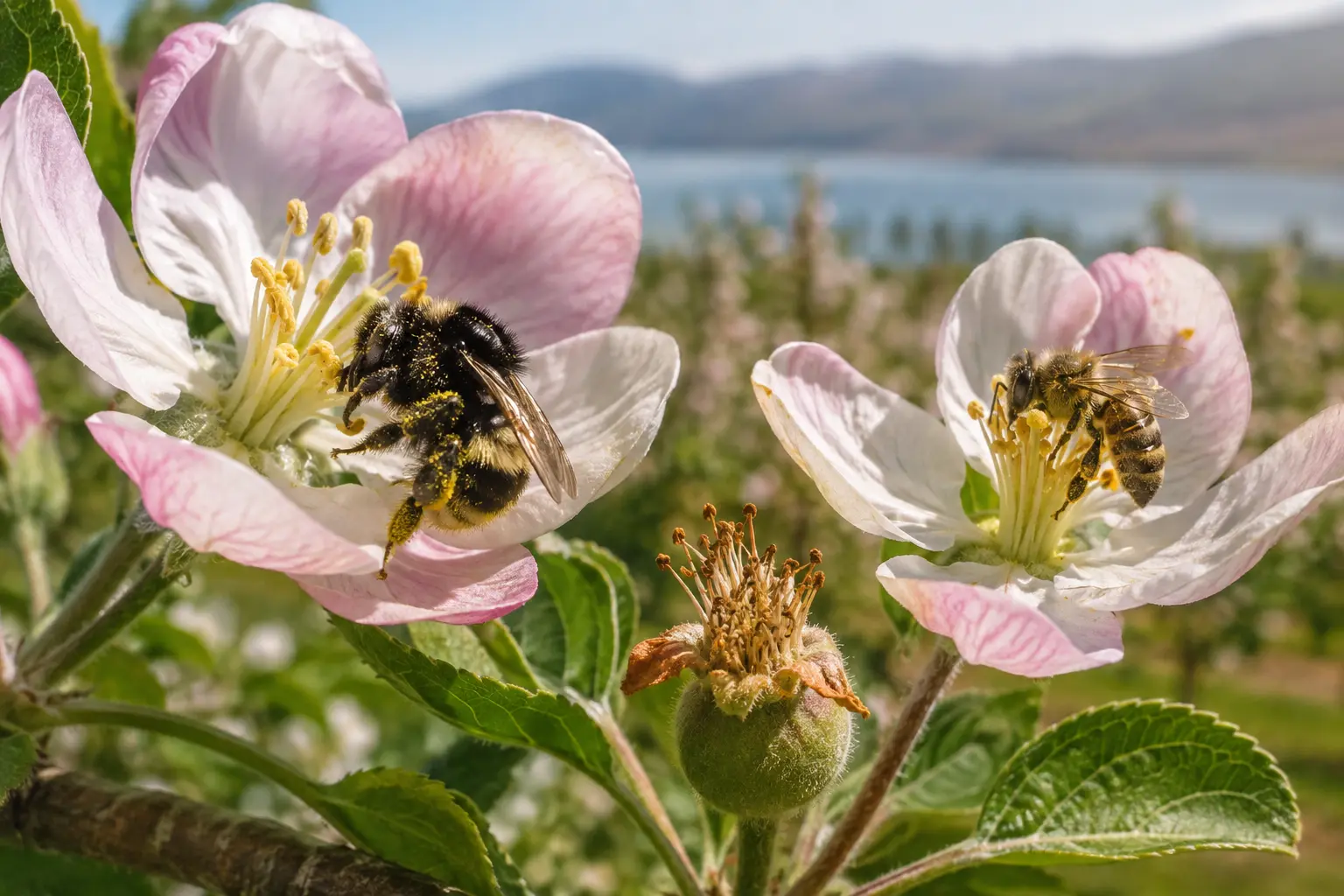
Bees visit blossoms for nectar and pollen. As they move, pollen can reach another compatible flower. After fertilization, petals fall and the flower's ovary begins the slow work of becoming fruit.
- 01Blossom opens
Anthers present pollen while colour and scent draw insect visitors.
- 02Pollen moves
Bees can carry grains between flowers as they forage.
- 03Petals fall
The showy parts finish their role after successful pollination.
- 04Fruit grows
Water, sunlight, nutrients, and time enlarge the developing apple.
Water with intention
A drip line turns a large supply into a small, useful dose.
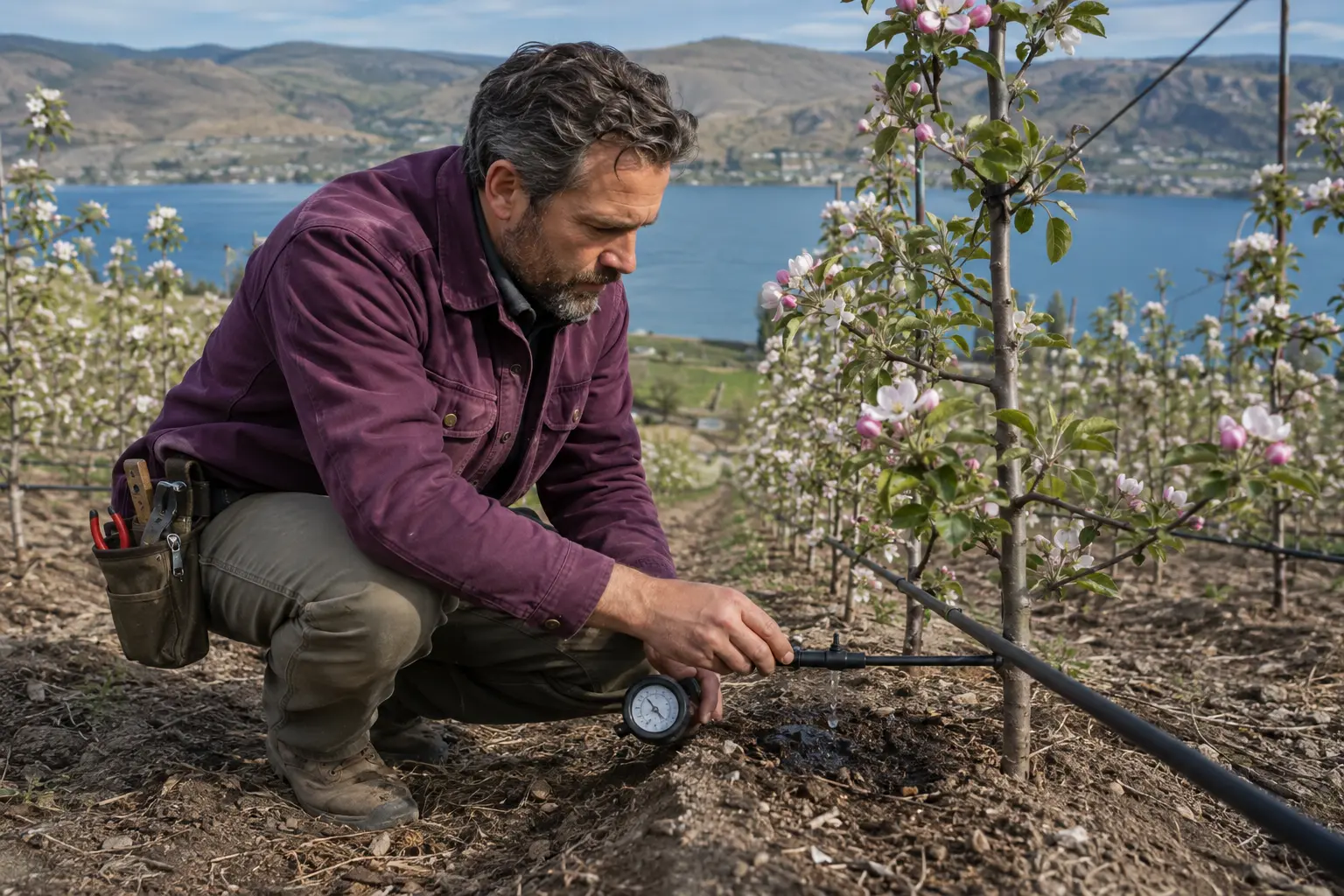
Small emitters release water close to each tree's root zone. The system works best when pressure, timing, soil moisture, and every outlet are checked—because one blocked emitter can leave one tree dry.
- Deliver close to roots
Less water is lost to wind and overspray.
- Match soil and weather
Run time changes with crop stage, heat, and moisture already stored.
- Inspect the whole row
Leaks, pressure changes, and blocked emitters are small failures with visible effects.
Four forces in one orchard
Fruit grows through connections, not shortcuts.
Read the orchard as a living production system. Each part has a distinct role, yet every result depends on the other three.
POLLINATIONFlowers exchange pollen.
Honey bees and wild insects can connect blooms across the orchard during a brief spring window.
IRRIGATIONWater arrives by design.
Drip lines translate stored water and operating decisions into measured delivery at each root zone.
SOILRoots need air as well as water.
Soil texture, organic matter, drainage, and living roots determine how long moisture remains useful.
HABITATThe orchard edge feeds resilience.
Diverse flowering plants can extend forage beyond apple bloom and connect cultivated land with surrounding habitat.
LANDSCAPEVISIT WITH CARE
A respectful orchard visit
Beautiful rows are still someone's workplace.
Public farm stands, blossom events, and u-pick seasons can make orchard country accessible, but entry is never automatic. Confirm hours and access, keep clear of equipment, and leave hives, branches, irrigation, and unripe fruit untouched.
Follow the invitation. Use designated parking and paths, supervise dogs and children, and ask before photographing people at work.
Find the chapter landscape
A long lake inside a narrow interior watershed.
The map centres the orchard country around Kelowna and Okanagan Lake, then places it within the wider basin from Vernon and Armstrong south through Penticton and Osoyoos.
The long main-valley lake anchors Kelowna and separates dry benches that rise toward the surrounding plateaus.
Fruit-growing districts extend beyond one city. The chapter uses the Kelowna area as an orientation point for the wider valley.
The valley lies within the living territory of the Syilx Okanagan people; travel and land stories begin long before modern orchards.
City park information and individual farm websites are the right places to confirm access and seasonal hours.
 Read the full chapterOpen Story 7 ↗
Continue the Pacific Adventure
Story 7
The Orchard Mystery
Join Lumi, Aspen, Hazel, and Barrett in the Okanagan Valley as fallen petals, yellow pollen, a silent drip line, and one tiny green apple reveal what really happened to the blossoms.
Opens the chapter page on the main Maple Explorers site.
Questions from curious explorers
Okanagan orchards, answered.
01Where is the Okanagan Valley?+
The Okanagan Basin is a narrow interior British Columbia watershed running from the Armstrong area south to the United States border. Kelowna, Vernon, Penticton, and Osoyoos all lie within it.
02Why do orchards need irrigation?+
The Okanagan has a dry interior climate and agriculture is the basin's largest water-use sector. Irrigation supplies water when natural precipitation cannot meet crop needs.
03How does drip irrigation help?+
A drip system releases small, controlled amounts close to the root zone. Good scheduling and maintenance help limit evaporation, overspray, and leaks.
04How does a blossom become an apple?+
Pollen must reach a compatible flower. After successful pollination and fertilization, petals fall and the flower's ovary develops into fruit with water, sunlight, nutrients, and time.
05Why plant flowers near an orchard?+
A diverse sequence of nectar- and pollen-bearing plants can feed wild pollinators before and after the short apple-bloom period.
06Can visitors enter any orchard?+
No. Orchards are working farms and usually private property. Visit only where public access is clearly offered and follow posted directions.
Research trail
Official sources behind the orchard guide
Basin geography, agricultural water use, drip irrigation, bee forage, and visitor context were checked against the Okanagan Basin Water Board, the Province of British Columbia, the City of Kelowna, UBC Okanagan, and Destination BC.