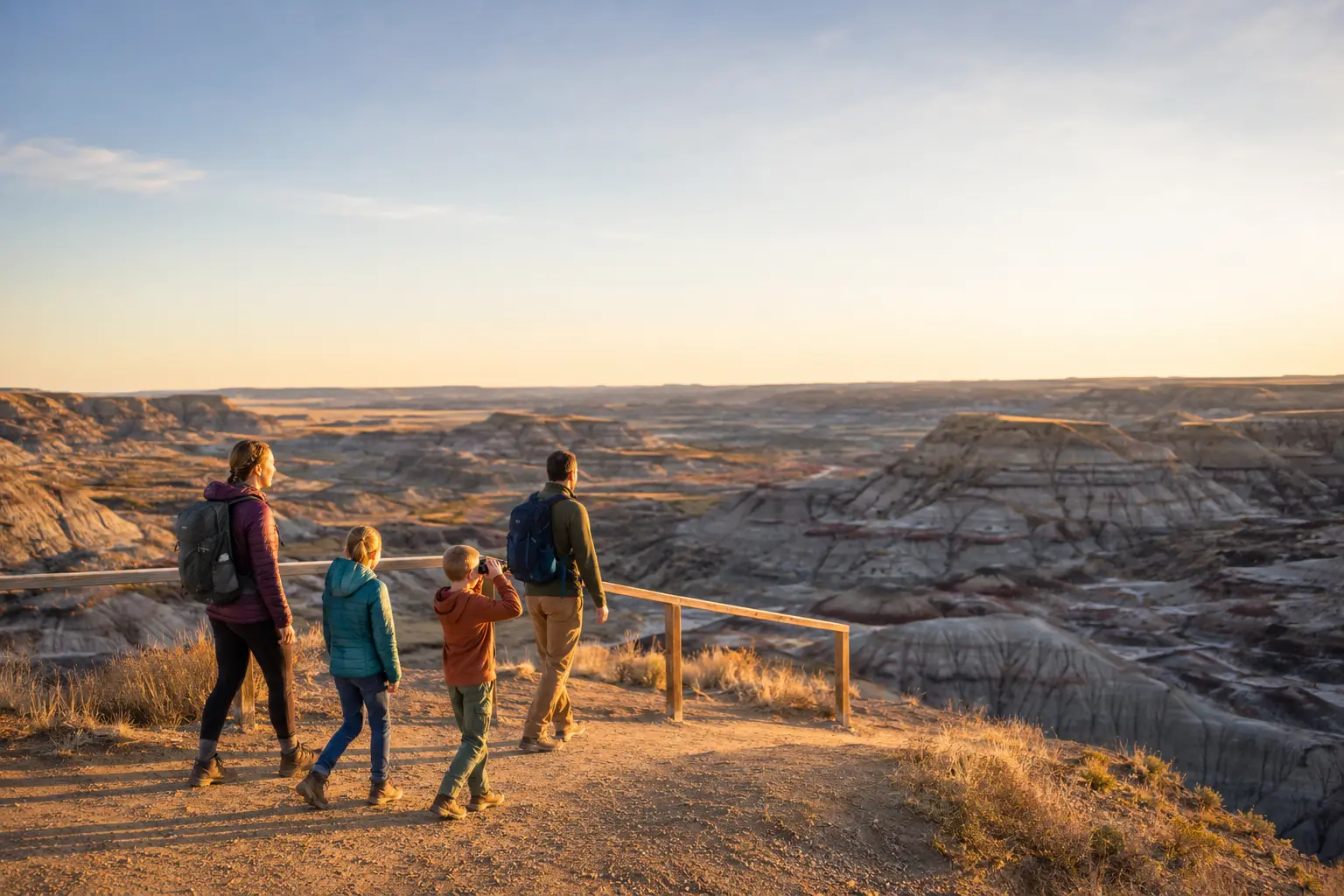
Dinosaur Provincial Park, Alberta
Build the
lost world.
Follow the clues beneath Alberta’s badlands—from fossil bone and ancient river mud to a vivid Cretaceous ecosystem.
PLACEDinosaur Provincial Park
LANDSCAPEAlberta badlands
TIME WINDOWAbout 75 million years ago
BIG IDEAClues become a world
Read the landscape
A fossil site is more than bones.
Seventy-five million years ago, this dry maze of coulees was a warm coastal plain crossed by rivers. Mud and sand buried traces of life; minerals, time, and later erosion turned those traces into a rare record of an entire ecosystem.
 LOOK · RECORD · LEAVE
Family field habits
Let the clues stay put.
The most useful observation is also the most respectful one. Keep the landscape intact for researchers, wildlife, and the next curious family.
-
01
Stay on public routesUse established paths, viewpoints, and barriers.
-
02
Photograph, don’t collectLeave fossils, rocks, and plants exactly where they are.
-
03
Notice the settingRecord the layers and land around a clue, not only the object.
Before a visit, use the official park page for current access and safety information.
Evidence, not guesswork
How a dinosaur takes shape
Each clue answers a different question. Together, they let scientists build—and revise—the most careful explanation the evidence allows.
Skulls & teeth
Beaks and tooth surfaces suggest what an animal could crop, crush, or tear.
Bones & joints
Attachment points and joint shapes help reveal posture, movement, and muscle.
Tracks & groups
Footprints preserve moments of behaviour—direction, speed, and sometimes herds.
Rock & habitat
Sediment, plants, pollen, fish, and turtles reconstruct the world around a dinosaur.
From specimen to screen
Many views.
One testable model.
Photography, photogrammetry, and 3D scanning can document a cast or specimen from many angles. The digital model can be rotated, measured, compared, and shared without repeatedly handling the original.
- Capture Photograph overlapping views with a known scale.
- Connect Software matches common points across the images.
- Measure A digital surface preserves shape and proportion.
- Test Researchers compare fits, poses, and interpretations.

Step into the Cretaceous
One habitat. Many connections.
A dinosaur was never alone in its world. Energy moved through plants, herbivores, predators, waterways, and the smallest living things.

Powers plants and the food web.
Feed herbivores and shelter small life.
Move energy through the ecosystem.
Return nutrients to soil and water.

Extinction & survival
Some branches end.
One still flies.
A major asteroid impact about 66 million years ago disrupted climate and food webs. Non-bird dinosaurs disappeared—but the bird branch survived.
Every chickadee, raven, and robin is part of the dinosaur story.
Shared clues—including feathers, wishbones, hollow bones, eggs, and three-toed feet—connect modern birds to small theropod dinosaurs.

Continue the Pacific Adventure
Story 14
Lost World
Join Lumi, Aspen, Hazel, and Barrett as casts, tracks, rock layers, and digital tools transform scattered clues into a living Cretaceous world.
Opens the chapter page on the main Maple Explorers site.
Questions from curious explorers
Field notes, answered.
01Why are dinosaur fossils found in Alberta’s badlands?+
About 75 million years ago, rivers crossed a warm coastal plain here. Sediment buried bones and plants, minerals helped preserve them, and much later erosion exposed the fossil-bearing rock layers we see today.
02Can families dig for or take fossils at Dinosaur Provincial Park?+
No. Fossils and rocks are protected, and visitors should leave every find exactly where it is. Observe from public areas, take a photo without disturbing the object, and follow current instructions from Alberta Parks.
03How do scientists rebuild a dinosaur from fossils?+
Palaeontologists compare bones, teeth, trackways, rock layers, and related animals. Casts, careful measurements, photography, and digital 3D models help them test how the pieces fit while keeping original specimens safe.
04What did Dinosaur Provincial Park look like in the Cretaceous?+
It was a low, warm coastal plain with rivers, ponds, forests, and many kinds of life. Fossils record dinosaurs alongside fish, turtles, plants, insects, birds, and small mammals.
05Did every dinosaur disappear?+
Non-bird dinosaurs became extinct after the asteroid impact about 66 million years ago, but one dinosaur branch survived: birds. Modern birds are living dinosaurs descended from small feathered theropods.
06What should children look for in a badlands landscape?+
Look for bands of different-coloured rock, river-cut shapes, plant life adapted to dry ground, and clues that water and erosion shaped the land. The best family habit is to look closely, record thoughtfully, and leave the landscape unchanged.
Research trail
Primary sources behind the page
Science and stewardship content was checked against these official and museum sources. For a future visit, always confirm current conditions with the official park.