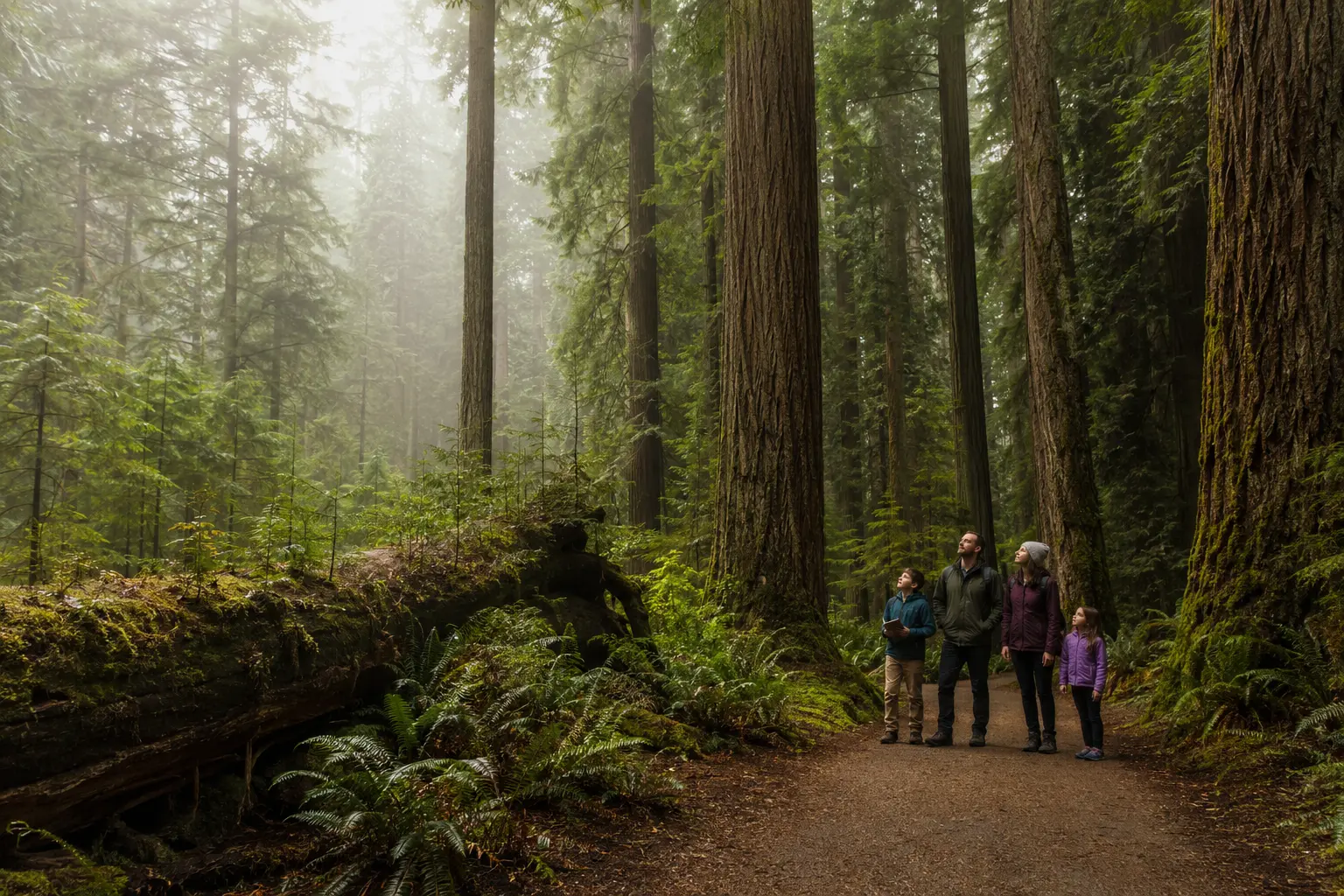
Cathedral Grove · Vancouver Island
Hear the
singing forest.
Step beneath Vancouver Island’s ancient canopy and discover how wind, water, fungi, insects, and fallen giants keep an old-growth forest alive.
PLACECathedral Grove
FORESTCoastal Douglas-fir old growth
LIVING SYSTEMCanopy to nurse log
BIG IDEAThe forest recycles itself
Read the forest
An old tree holds more than years.
Cathedral Grove protects a remarkable stand of old-growth Douglas fir in MacMillan Park. Some trees have lived for more than 800 years, while fallen trunks continue the story by opening light, holding moisture, sheltering small life, and returning nutrients to the forest.
Follow the real route
From ferry to forest, every turn has a place.
This overview keeps the adventure fun without bending the geography. The coastline, communities, ferry terminals, and driving line are aligned to real map data, with Tofino correctly shown on the Esowista Peninsula of Vancouver Island.

Cross the Salish SeaThe mainland connection runs from Tsawwassen to Swartz Bay, then reaches Victoria by Highway 17.
Follow numbered highwaysHighways 1, 19, and 4 form the land route north and west across Vancouver Island.
Find the chapter stopCathedral Grove is on Highway 4 between Qualicum Beach and Port Alberni—not on the outer coast.
 PAUSE · LISTEN · LEAVE
Family field habits
Explore with quiet attention.
Old-growth forests reward slow observation. A short pause can reveal movement, texture, scent, and sound without disturbing the life around you.
-
01
Stay on designated trailsProtect shallow roots, seedlings, moss, and fungi by keeping feet on established routes.
-
02
Listen before namingNotice wind, dripping water, wingbeats, and branch movement before deciding what made a sound.
-
03
Leave the forest completeDo not move bark, fungi, cones, or fallen wood; each may be habitat or food.
Use the official park or government page for current access, conditions, and safety information.
A forest in motion
Four ways the grove tells its story
Old growth can look still, but energy, water, sound, and nutrients are always moving through it.
Towering canopy
Large crowns gather light and create layers of shade, shelter, and growing space below.
Wind & sound
Needles, leaves, and branches of different sizes move and vibrate in different ways.
Fallen wood
A downed trunk can bridge wet ground, hold water, and create protected microhabitats.
Decomposers
Fungi and tiny organisms break down wood and help return nutrients to the soil.
Life after falling
A fallen giant is still at work.
Death does not end a tree’s role. A log changes slowly, becoming softer, wetter, and richer in small habitats as fungi, insects, and microbes transform it.
- Open A fallen tree can create space and let more light reach the forest floor.
- Shelter Cracks, bark, and damp wood protect small animals and fungi.
- Break down Decomposers convert complex wood into smaller materials.
- Begin again Moist, nutrient-rich surfaces can support seedlings and new growth.

Listen across the layers
The grove has many voices.
Forest sound is shaped by weather, tree form, water, wildlife, and distance. Listening carefully is a way of studying how the whole place works.

Catches light and wind.
Drips, pools, and flows.
Softens and layers sound.
Clicks, calls, and rustles.

Care for living history
Wonder grows
when we leave no trace.
Old growth is rare, biologically rich, and culturally important. Its roots, soils, and decaying wood are vulnerable to repeated trampling and collecting.
The best souvenir is a sharper way of seeing.
Staying on the trail protects more than the plants we can name. It safeguards the slow relationships that make an old forest possible.

Continue the Pacific Adventure
Story 1
The Secret of the Singing Forest
Join Lumi, Aspen, Hazel, and Barrett as a trail, a stream, a fallen tree, mushrooms, and one quiet listening moment reveal the life inside Cathedral Grove.
Opens the chapter page on the main Maple Explorers site.
Questions from curious explorers
Field notes, answered.
01Where is Cathedral Grove?+
Cathedral Grove is the well-known old-growth forest area in MacMillan Park on central Vancouver Island, British Columbia.
02How old are the trees in Cathedral Grove?+
BC Parks reports that some ancient Douglas firs in the grove are more than 800 years old. A forest contains many ages and species, so not every tree is the same age.
03Why are fallen trees important?+
Fallen trees create light gaps, hold water, shelter wildlife and fungi, and slowly return nutrients to forest soils as they decompose.
04Why do forests make so many sounds?+
Wind moves needles, leaves, branches, and trunks; water drips and flows; and animals communicate or move through habitat. Tree size, shape, spacing, and weather all change the soundscape.
05What is a nurse log?+
A nurse log is a fallen trunk that supports new life by offering moisture, nutrients, shelter, and sometimes a raised surface where mosses, fungi, and seedlings can grow.
06How can families protect an old-growth forest?+
Stay on designated trails, follow posted guidance, leave natural objects where they are, avoid visiting forest trails in dangerous wind, and observe without disturbing plants or wildlife.
Research trail
Official sources behind the field guide
Core science and stewardship guidance were checked against these primary public sources. Current visit details should always be confirmed directly with the destination.