Explore Canada · Banff National Park
Where wildlife gets the right of way
Discover how Banff's forest-covered crossings reconnect mountain habitat, then plan a public-access family day inspired by Chapter 10.
A real-world companion to Wildlife Crossing, Chapter 10 of The Maple Explorers' Pacific Adventure.
Banff National Park · Alberta
A valley shared
Roads move people. Corridors move wildlife.
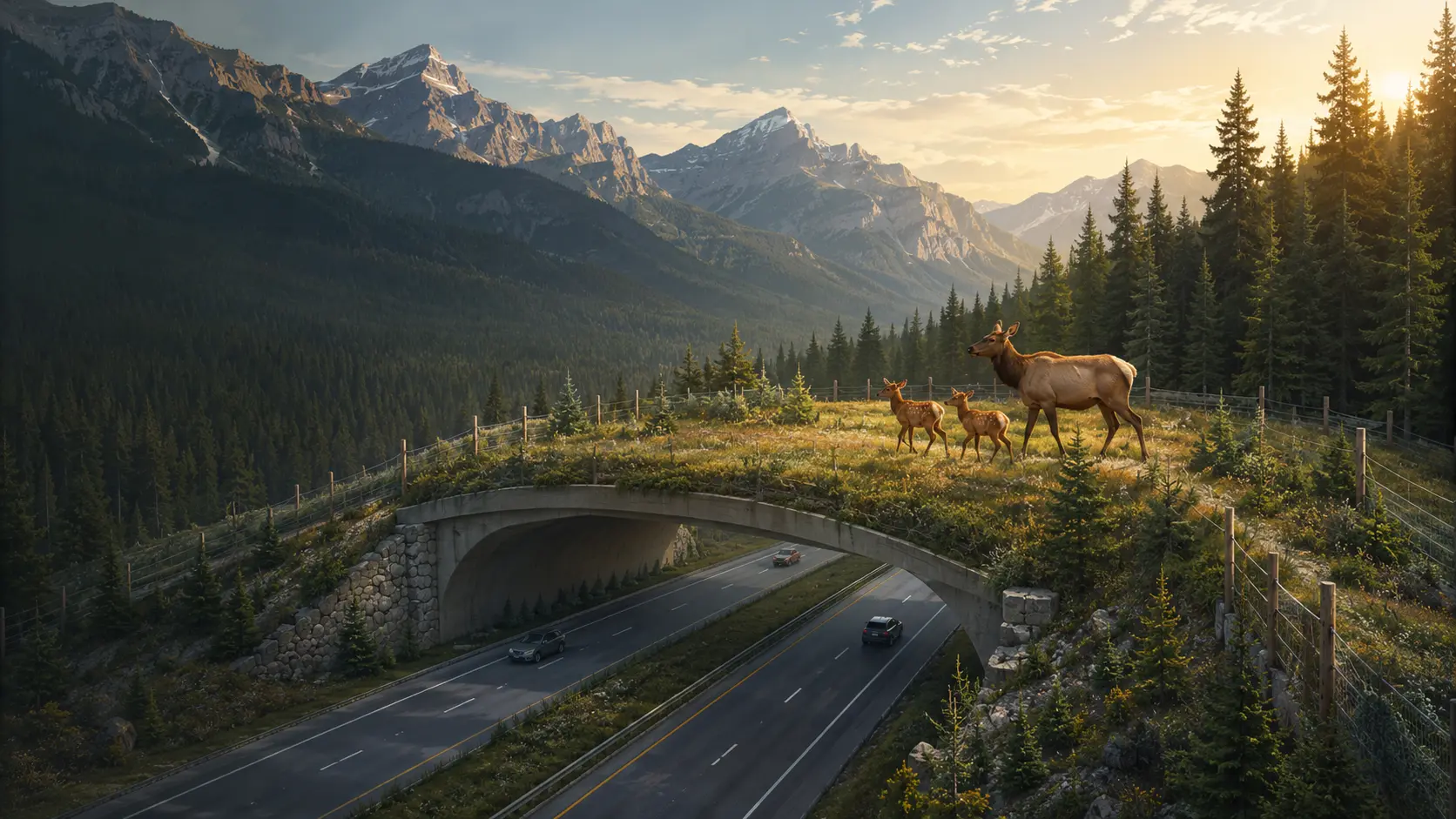
Banff's broad Bow Valley is an important travel corridor for people and animals. Fences, underpasses and planted overpasses help wildlife cross busy roads without stepping into traffic.
Parks Canada reports that 49 crossing structures across Banff, Yoho and Kootenay have reduced wildlife collisions by more than 80% - and by over 96% for elk and deer.
Cave and Basin has been a special place for Indigenous Peoples for more than ten thousand years. Today, its public exhibits and boardwalks help families explore conservation, culture and the relationship between people and the land.
Read the official road-ecology storyFamily route
A conservation day without chasing wildlife
Use public places to learn, walk and look closely. Wildlife sightings are never guaranteed - and giving animals space is part of the adventure.
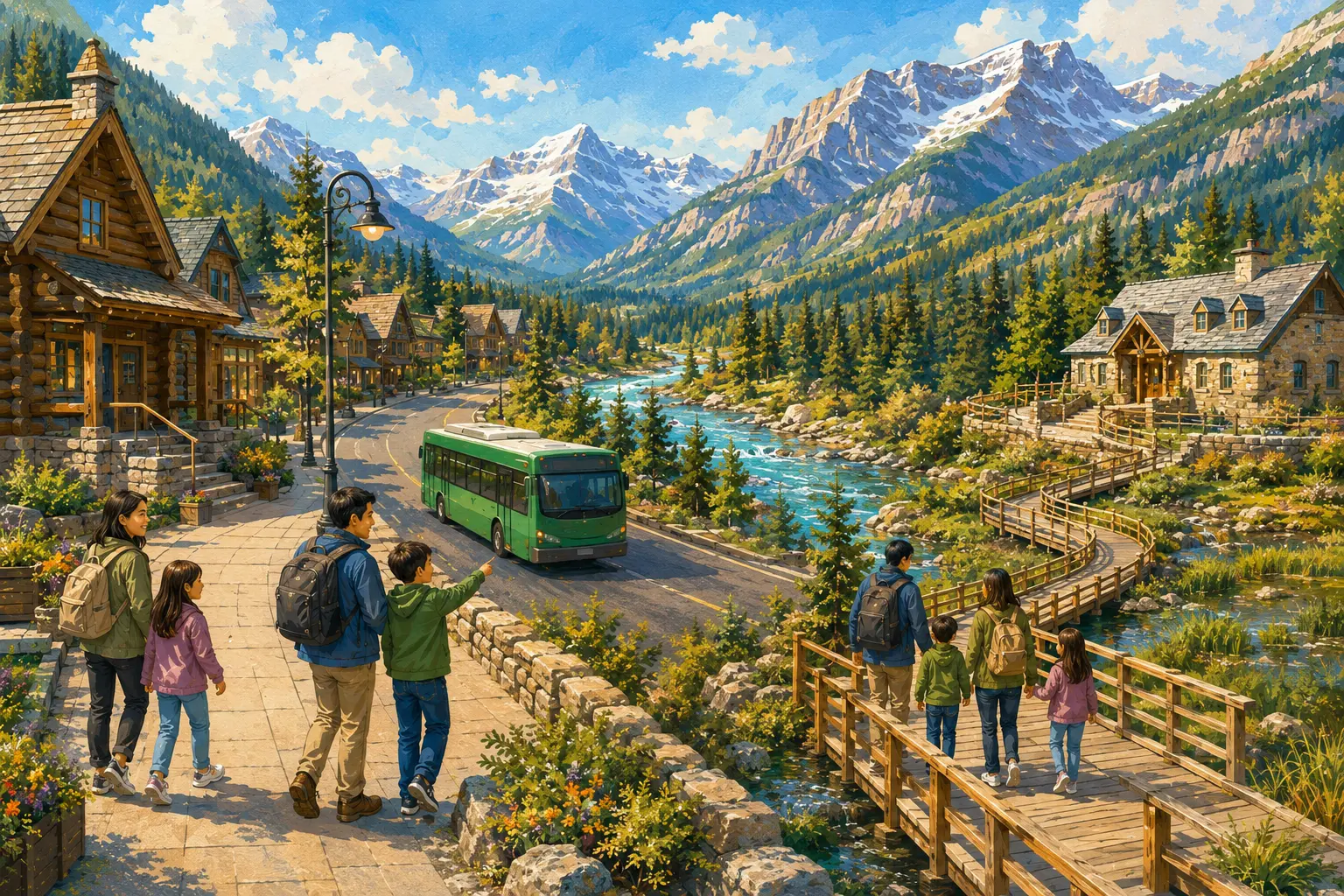
- 1 Downtown + Park Museum
- 2 Current transit or town walk
- 3 Cave + Basin trails
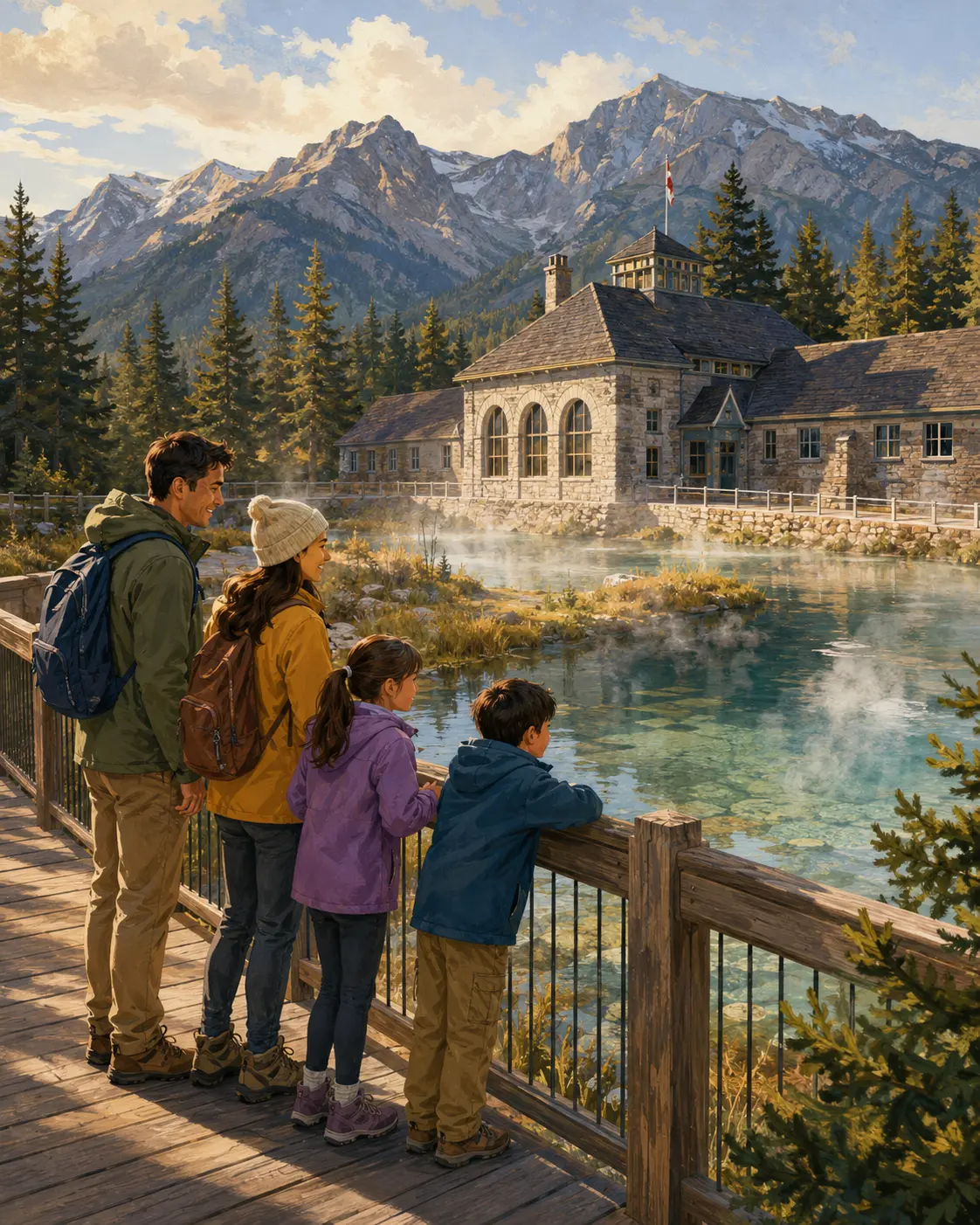
Cave and Basin with kids
Short walks, big questions
The thermal springs are protected habitat. Stay on the boardwalk, leave the water untouched and let children look for steam, algae, insects, fish and wetland birds from the path.
Indoor exhibits
Begin with the learning spaces that are open, then let each child choose one idea to investigate outdoors.
Public boardwalks
Look for protected water, wetland plants and wildlife clues from the routes currently open to visitors.
Optional trail
Choose a longer public walk only when official conditions, the weather and your family’s energy all agree.
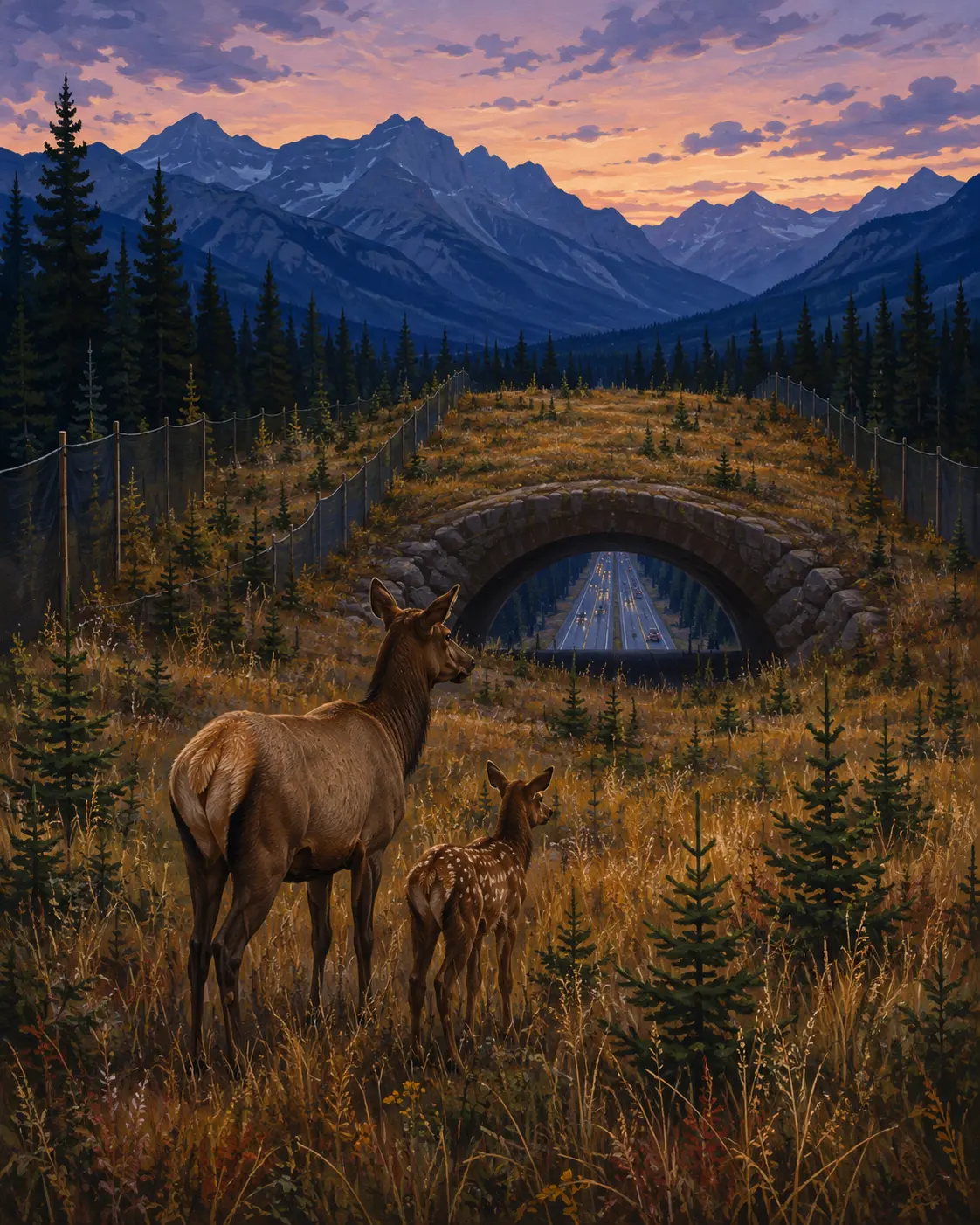
A crossing is not a lookout
Let the bridge do its quiet work
Banff's wildlife crossings are closed to public entry. They succeed because animals can approach and cross without people in the way. Never park on the Trans-Canada Highway, climb a fence or walk onto a crossing.
Read the official closureWild always means wild
Give every animal an open path
Distance protects your family and keeps wildlife from changing its natural behaviour. Watch through binoculars, use a zoom lens and move away if an animal notices you.
Elk, deer, sheep and most large wildlife
Never stand between a cow elk and her calf. Spring calving and fall rutting seasons require extra care.
Bears, wolves, cougars and coyotes
Carry bear spray accessibly on trails, keep children close and never feed or entice wildlife.
Stay in your vehicle when viewing wildlife from a road, then continue moving to prevent a wildlife jam.
Keep food, garbage and scented items secured. Feeding or disturbing wildlife is illegal in a national park.
Keep pets leashed and children within reach. Follow every closure, warning and trail notice.
Plan a flexible visit
A family checklist that works in every season
Build the day around public places and current conditions instead of fixed schedules. These four choices stay useful whenever your Banff adventure happens.
Choose public learning places
Use Cave and Basin, its public boardwalks and the Banff Park Museum for hands-on learning. Wildlife crossings themselves are not visitor attractions.
Check once, just before leaving
Open the official visitor pages for current hours, trail notices, closures and park-entry information when your travel date is close.
Pick the easiest way around
Compare current transit, walking and parking options, then choose the route that best suits your family’s energy and mobility needs.
Pack for a mountain day
Bring water, layers, sun and rain protection, comfortable footwear and binoculars so wildlife can be watched from a safe distance.
Crossing science
How can a bridge reconnect a home?
A highway is a barrier. A crossing, guide fence and protected approach work together as one connected system.
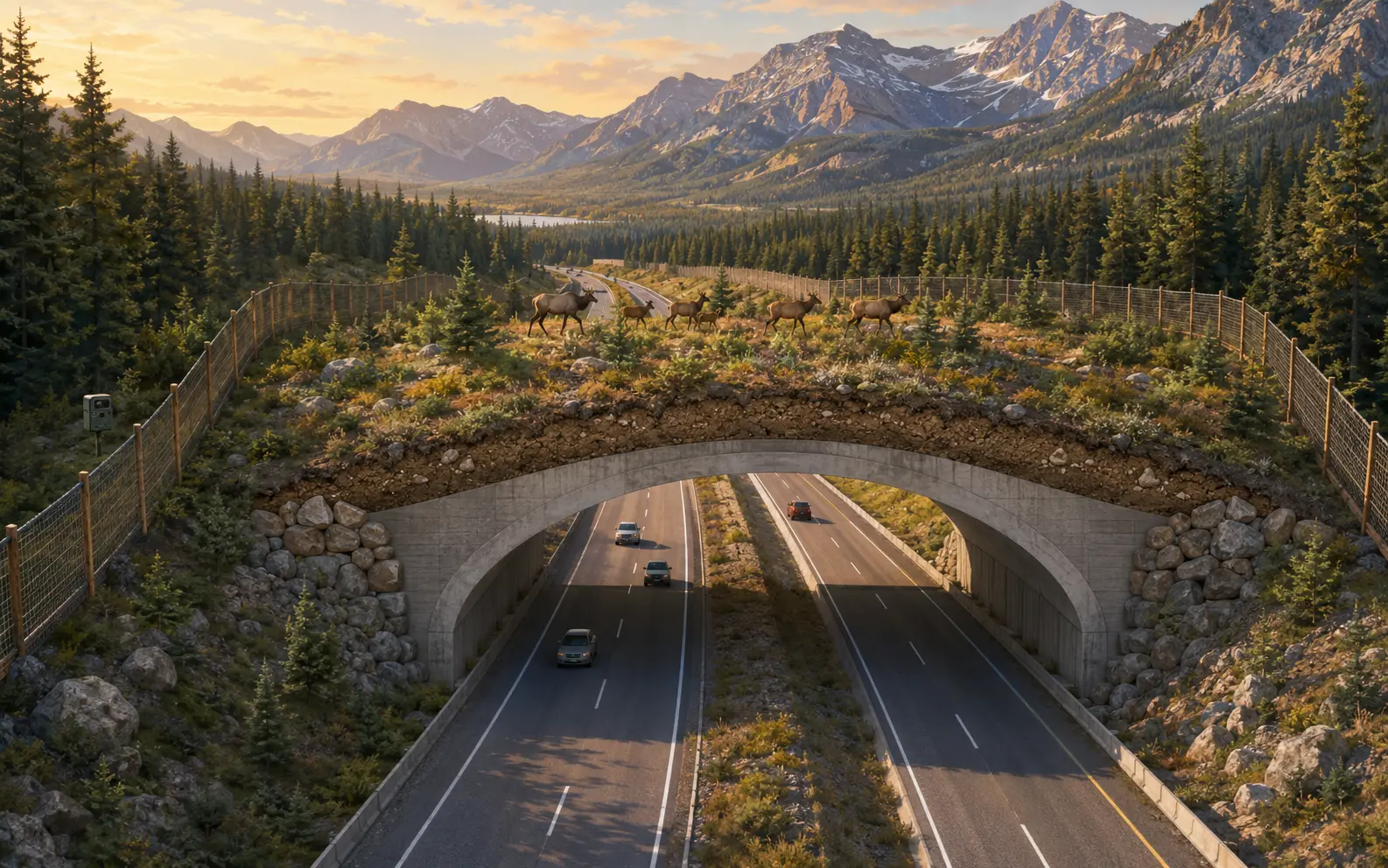
Connect the habitat, not just the road
The overpass is wide, quiet and planted. Fencing keeps wildlife away from traffic and funnels movement toward the safe route. Researchers use tracks and remote cameras to understand how animals respond.
Across Banff, Yoho and Kootenay: 42 underpasses + 7 overpasses = 49 wildlife crossings.
A road divides habitat
Traffic can block routes to food, water, shelter and mates.
Fences guide movement
Roadside fencing keeps animals away from traffic and leads them toward a crossing.
Habitat spans the road
Soil, rocks and native plants help the structure feel like part of the surrounding landscape.
Cameras record use
Remote cameras and tracks help researchers learn which species use each safe route.
Follow what moves
Different animals choose different paths
Wide overpasses can suit open-country species, while forested underpasses provide cover. The full network gives more species a way through the valley.
Herd travellers
These grazers move through the valley to find seasonal food, shelter and space. Cow elk lead calves along familiar routes.
Wide-ranging mammals
Large carnivores need connected landscapes. Quiet approaches help them cross without becoming comfortable around people.
Clues for scientists
Monitoring can show when a species first uses a crossing and how patterns change over many years.
One working system
A bridge alone is not enough. Fencing, vegetation and protected land on both sides make the route useful.
Family questions
Before you go
Quick answers based on current official guidance.
Can families walk onto Banff's wildlife overpasses?
No. Wildlife crossing structures are closed to public entry so animals can use them without disturbance. Never stop on the Trans-Canada Highway to visit or photograph a crossing.
How many wildlife crossings are there in the mountain parks?
Parks Canada reports 49 crossing structures across Banff, Yoho and Kootenay national parks: 42 underpasses and 7 overpasses.
Do wildlife crossings really work?
Yes. Parks Canada reports that these crossings and their fencing reduced wildlife collisions by more than 80%, and by over 96% for elk and deer.
Where can children learn about conservation in Banff?
Cave and Basin National Historic Site offers exhibits and public boardwalks. Banff Park Museum is another family-friendly option; check its official visitor page before you go.
How close can we get to elk in Banff?
Stay at least 30 metres, about three bus lengths, from elk. Stay 100 metres from bears, wolves, cougars and coyotes. If an animal changes its behaviour, you are too close.
 Open the story
 Continue the adventure
Read Wildlife Crossing
Lumi, Aspen, Hazel and Barrett follow elk tracks, discover a forest-covered bridge and learn how a wildlife corridor joins two halves of a mountain home.
- Designed for children ages 5-9
- Wildlife corridors explained through story clues
- Safe wildlife viewing and thermal-spring stewardship
Research sources
The page uses evergreen planning guidance. Follow the official links below for current hours, transit, passes, trail conditions and closures.